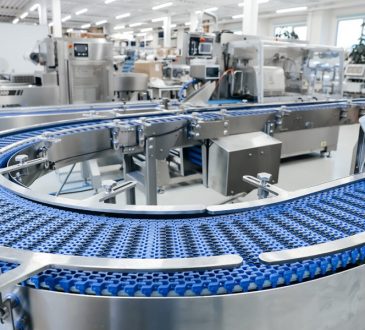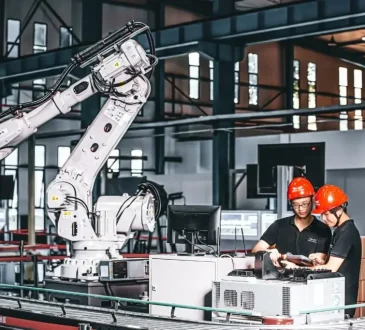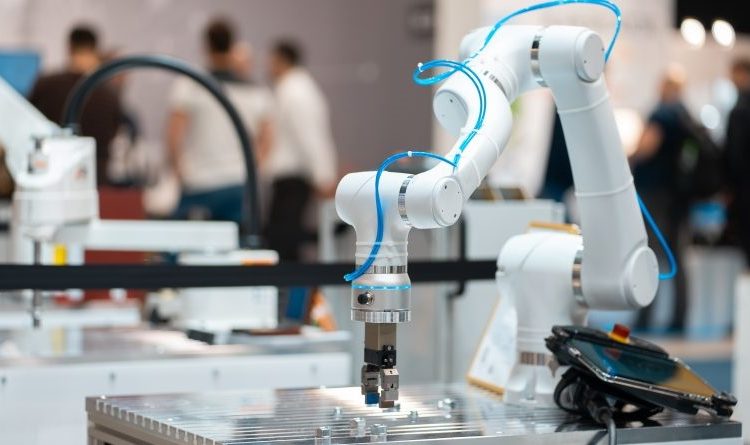
For decades, the factory floor was governed by physical isolation and deliberate segregation. Heavy machinery operated inside closed control networks, maintenance schedules lived in greasy paper binders tucked behind tool cribs, and operational data was trapped within proprietary programmable logic controllers. If a stamping press began running slightly off-center or a motor bearing degraded mid-shift, the problem usually announced itself with an alarming clatter, a cloud of smoke, and hours of unexpected downtime.
Today, industrial manufacturing is leaving behind this siloed, reactive paradigm. The conversation has moved past theoretical buzzwords like Industry 4.0 into concrete engineering reality: the emergence of the smart, connected factory.
Smart production is not about installing expensive gadgets for the sake of novelty, nor is it an attempt to replace human operators with fully unstaffed facilities. Instead, it represents the deliberate convergence of operational hardware, deterministic edge computing, machine vision, and real-time data architectures. By transforming static machinery into responsive, self-aware systems, modern manufacturers are building facilities capable of diagnosing their own wear, rebalancing their own production lines, and delivering precision at scales previously considered impossible.
Bridging the IT/OT Divide Through Unified Connectivity
Historically, the deepest fault line in any industrial facility existed between Information Technology (IT) and Operational Technology (OT). The IT team cared about network bandwidth, enterprise software, and cloud storage, while plant-floor engineers prioritized physical safety, deterministic machine timing, and uncompromised uptime. Bridging those distinct cultures was long regarded as a logistical nightmare.
Smart production bridges this divide by deploying universal industrial communication protocols and modern edge infrastructure. Instead of ripping out reliable, multimillion-dollar legacy equipment, plants retrofit existing machines with non-invasive industrial Internet of Things (IIoT) sensor networks. Current transducers clamp around power leads, high-frequency accelerometers magnetically adhere to bearing housings, and optical sensors track workpiece progress along legacy conveyor belts.
To prevent plant networks from being overwhelmed by massive telemetry streams, smart facilities rely on edge computing gateways. Rather than pushing raw high-frequency vibration data directly to remote cloud servers—a process that introduces intolerable latency and massive data-transfer bills—edge devices filter, normalize, and process signals right at the machine.
Using lightweight architectures like Unified Namespace (UNS) paired with MQTT and OPC UA communication standards, plants convert disparate machine languages into a single, standardized data stream. When an anomaly occurs on a lathe, that event is published instantly across the facility’s software ecosystem, allowing quality teams, maintenance technicians, and scheduling systems to act on identical operational truths simultaneously.
Replacing Calendar Guesswork with Predictive Health Monitoring
Traditional maintenance strategies have historically oscillated between two equally flawed extremes: run-to-failure or rigid, calendar-based servicing. Running equipment until it breaks destroys line schedules, damages tooling, and creates major safety hazards. Conversely, scheduled preventative maintenance—such as replacing motor bearings every six months regardless of operating hours—wastes thousands of dollars discarding components with significant remaining useful life.
Smart production eradicates this inefficiency by shifting facilities to condition-based predictive maintenance.
Modern smart machinery listens to its own physical operating signatures. High-bandwidth vibration sensors pick up the subtle acoustic frequencies of micro-spalling deep inside a roller bearing weeks before heat build-up or physical wobble appears. Thermal imaging cameras continuously track temperature distributions across high-voltage distribution panels, detecting loose electrical connections before arc flashes occur.
Machine-learning algorithms analyze these micro-fluctuations against historical failure curves and active operating loads. Instead of dispatching a technician on a blind maintenance sweep, the system automatically schedules replacement work orders during planned changeovers, flags the exact replacement part needed in the inventory database, and gives operators advance warning to dial back spindle speeds until the window opens. By catching minor mechanical degradation early, plants routinely slash catastrophic failures and extend the capital lifespans of critical machines.
Digital Twins: Real-Time Modeling and Virtual Commissioning
As consumer preferences demand higher product variety and shorter run times, the cost of retooling a physical manufacturing line has escalated dramatically. Building physical prototypes, debugging robot kinematics, and adjusting material chutes on the floor can sideline a production line for weeks.
Smart facilities resolve this through dynamic digital twins—high-fidelity, three-dimensional virtual simulations that mirror every physical asset and process variable in real time.
Virtual Commissioning Before Metal Meets Floor
Before a single physical robot is anchored to the concrete or a conveyor belt is plumbed with pneumatic drops, engineers run the entire cell virtually. Using physics engines that accurately calculate gravity, friction, motor torque, and electrical cycle times, automation programmers debug logic code, test safety clearance envelopes, and discover line bottlenecks in software. Virtual commissioning compresses weeks of high-stress physical installation into days of smooth, pre-validated assembly.
In-Flight Operational Optimization
Once the line is operational, the digital twin remains active, ingesting real-time sensor streams from the physical floor. Plant managers can run immediate “what-if” scenarios: If customer demand shifts from SKU A to SKU B, what does that do to thermal loads on the curing oven? If line velocity accelerates by eight percent, which workstation becomes starved of components? By stress-testing operating parameters inside a virtual replica, leadership makes aggressive optimization decisions without risking physical scrap or unplanned stops.
Automated Optical Inspection and Closed-Loop Quality Control
Quality assurance in traditional manufacturing environments has long functioned as a post-mortem inspection exercise. Finished parts were periodically hauled to a dedicated quality laboratory where technicians measured critical dimensions using coordinate measuring machines. If an injection molding tool developed a clogged vent or a stamping punch chipped four hours earlier, every part produced during that window had to be quarantined, reworked, or scrapped.
Smart factories deploy inline machine vision and automated metrology to catch defects within milliseconds of creation:
-
Multi-angle optical inspection: High-resolution cameras combined with structured laser lighting scan workpieces at line velocity, measuring geometric tolerances, surface finishes, and hole placements down to the micron.
-
Deep-learning defect classification: Vision algorithms instantly distinguish between benign cosmetic surface reflections and genuine structural micro-cracks, preventing false rejects from halting production.
-
Closed-loop machine offsets: When an inspection camera detects that a drilled hole is beginning to drift toward the outer limit of an allowable tolerance, it does not just sound an alarm. It transmits an automated offset command back to the upstream CNC controller, correcting the physical tool path on the subsequent cycle before an out-of-spec part is ever produced.
This closed-loop feedback mechanism converts quality control from a sluggish gatekeeper into an active, self-correcting safeguard that protects scrap margins and preserves valuable raw material.
Amplifying the Human Operator on the Plant Floor
A common misconception regarding the digital transformation of factories is that advanced technology aims to hollow out the workforce. In practice, the primary operational return of smart manufacturing is the augmentation and elevation of frontline workers.
Asking experienced assemblers to flip through hundred-page paper binders, manually write down hourly production tallies, or walk across sprawling facilities to find an overhead crane is a profound waste of human potential. Smart plants introduce connected worker platforms that deliver contextual intelligence directly to the point of work.
Technicians equipped with ruggedized tablets or heads-up augmented reality displays receive real-time, step-by-step assembly guides tailored to the specific variant currently in front of them. When a junior maintenance technician faces an unfamiliar hydraulic valve block, augmented reality overlays project fluid pathways, bolt torque values, and interactive schematics directly onto their field of view.
Rather than spending shifts on tedious clerical work and repetitive data entry, operators evolve into dynamic process orchestrators who monitor dashboards, solve complex mechanical exceptions, and lead continuous improvement initiatives.
Escaping Pilot Purgatory and Building for Scale
The greatest danger facing modern manufacturing facilities is not a lack of technological options, but the trap of disconnected experimentation. Thousands of plants run isolated proofs-of-concept—an isolated cobot here, an experimental sensor there—that deliver localized wins but fail to impact enterprise-level financial metrics.
Succeeding in smart production requires treating software and data infrastructure with the same rigor traditionally reserved for tooling and structural engineering. Organizations must prioritize open architectures, enforce clean data standards from day one, and focus digital investments exclusively on high-impact operational friction points.
When physical machines communicate seamlessly, operational telemetry flows without friction, and workers are armed with predictive intelligence, the factory floor ceases to be a volatile environment governed by unpredictable breakdowns. It becomes a synchronized, resilient production engine—one that turns operational speed, precision, and agility into an enduring competitive advantage.