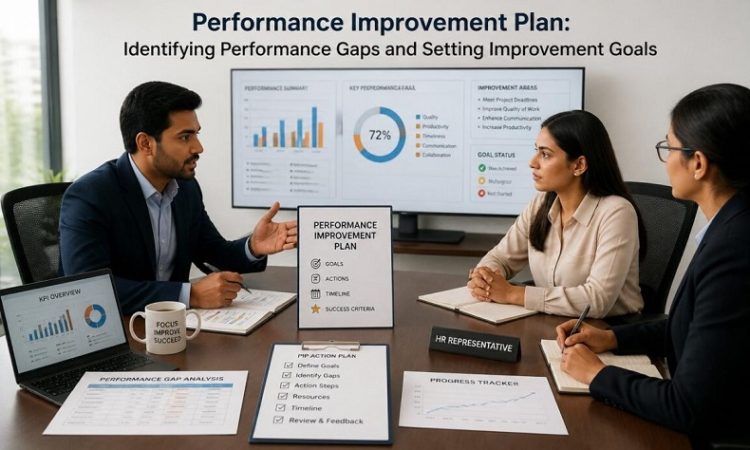
When a terminated worker files a charge of discrimination, retaliation, or wrongful termination with a regulatory agency or state court, the central piece of evidence under scrutiny is almost always the Performance Improvement Plan (PIP). To human resources professionals and frontline managers, a PIP often feels like a standard administrative instrument designed to either correct sub-par performance or document an inevitable separation. To an employment litigation attorney, however, a poorly drafted or hastily executed plan looks like something far more dangerous: a pretextual paper trail manufactured to justify an unlawful dismissal.
While the majority of private-sector employment across the United States operates under the legal doctrine of at-will employment, that doctrine offers no defense against claims under Title VII of the Civil Rights Act, the Americans with Disabilities Act, the Age Discrimination in Employment Act, or federal and state whistleblower protections. If an employee can demonstrate that a PIP was administered in bad faith, applied inconsistently compared to peers, or launched in response to a protected activity, the employer faces substantial liability.
Implementing a performance improvement plan legally requires stripping away subjective workplace frustration and replacing it with measurable benchmarks, genuine institutional support, and rigorous procedural fairness.
Auditing for Protected Activity and Disparate Treatment
Before a manager places an underperforming employee on a structured improvement plan, human resources must conduct an independent risk assessment. A PIP should never be issued in a vacuum of immediate managerial frustration.
The first critical inquiry is whether the employee has engaged in protected activity within the preceding several months. Protected activity extends well beyond formal EEOC complaints. It includes:
-
Requesting medical leave under the Family and Medical Leave Act (FMLA)
-
Disclosing a physical or mental health condition that might require an accommodation under the Americans with Disabilities Act (ADA)
-
Raising concerns about wage-and-hour compliance, overtime misclassification, or workplace safety
-
Reporting internal harassment or participating in an internal investigation as a witness
-
Engaging in concerted activity regarding working conditions or compensation
When an organization places a worker on a corrective plan shortly after that worker engages in a protected activity, plaintiff attorneys establish a presumption of retaliation based on temporal proximity. If a worker who received satisfactory annual reviews suddenly receives a punitive thirty-day plan two weeks after requesting FMLA paperwork, the optics are inherently compromised.
Equally vital is the comparator analysis. Employment discrimination claims rarely hinge on whether the employee was genuinely underperforming; they hinge on whether other workers outside the protected class performed just as poorly without facing similar disciplinary action. If a sales executive is placed on a PIP for missing quarterly revenue goals by twenty percent, HR must verify that colleagues of different races, genders, or age brackets who missed their numbers by similar margins were held to the identical standard. Disparate enforcement destroys legal defensibility.
Drafting Objective Metrics Over Subjective Critiques
The most significant legal vulnerability in standard PIP documents is reliance on vague, personality-driven critiques. Statements such as “needs to improve professional presence,” “exhibits a negative attitude during department meetings,” or “lacks executive leadership” are subjective assessments. In depositions, subjective criteria are easily unraveled because they cannot be measured by neutral, external benchmarks, making them appear to be masks for personal animus or discriminatory bias.
To create an enforceable, legally resilient plan, every performance deficiency must be tethered to observable behaviors and quantifiable deliverables.
Instead of directing an employee to “communicate more effectively with cross-functional teams,” the plan should specify: “Provide a written project update to engineering and logistics leads every Tuesday and Thursday by 4:00 PM Eastern, utilizing the approved departmental status template.”
Instead of demanding that a customer service representative “demonstrate better client dedication,” the plan should state: “Maintain an average initial ticket response time of under twelve minutes across all assigned shifts, while maintaining an internal quality assurance audit score of at least 88 percent on weekly recorded calls.”
Defensible plans articulate the baseline standard required for all individuals in the specific job role, document the historical shortfall with dates and ticket numbers, outline the exact numerical or deliverable metric required to achieve parity, and establish a clear verification method.
Providing Reasonable Timelines and Material Resources
For a PIP to survive judicial scrutiny, an employer must prove that it was implemented with a legitimate business intent to rehabilitate the employee, rather than serving as an engineered trap.
Setting an unachievable quota or providing an impossibly short runway exposes the company to claims of constructive discharge or bad-faith employment practices. Placing a software engineer on a seven-day plan to rewrite an entire legacy database architecture is not a performance corrective; it is an eviction notice disguised as corporate policy.
Standard timelines typically span thirty, sixty, or ninety days, depending directly on the operational complexity of the tasks and the natural rhythm of the business cycle. If client sales cycles average forty-five days, a thirty-day plan is structurally flawed from its inception because the employee physically lacks the calendar window to demonstrate improvement.
Furthermore, the document must detail the affirmative institutional support the company will provide during the remediation period. This includes:
-
Access to necessary software licenses, hardware, or analytical tools
-
Scheduled re-training on specific workflows or internal standard operating procedures
-
Reallocation of peripheral, non-essential duties so the employee can concentrate on core remediation areas
-
Designated mentors or team leads available for technical escalation
If an employer claims an employee failed to meet performance standards but withheld the operational tools, training, or system access required to hit those standards, the plan ceases to be legally credible.
Structured Check-Ins and Contemporaneous Documentation
A performance improvement plan is not a document that is signed on day one and left unaddressed until a final termination meeting on day thirty. Doing so invites the employee to argue that they were abandoned, left to guess whether their course corrections were adequate, or actively set up to fail.
The plan should explicitly mandate regular, scheduled review sessions, typically held weekly or bi-weekly. During these sessions, the manager and employee should review the specific metrics agreed upon in the document.
Contemporaneous documentation of these meetings is paramount. Memories fade, and oral recollections are notoriously unreliable during litigation two years later. Following every check-in, the supervising manager must generate a written summary of the conversation:
-
What specific metrics were met or missed during the preceding week
-
Concrete examples of work products reviewed
-
Direct feedback provided to the employee regarding remaining gaps
-
Any questions or concerns raised by the employee during the meeting
This summary should be delivered to the employee via corporate email within twenty-four hours of the meeting, creating an unbroken, contemporaneous digital paper trail that reflects consistent, ongoing guidance and transparent communication.
Managing Mid-Plan Complications
Even carefully structured plans can encounter unexpected complications during execution. The two most common scenarios involve medical disclosures and internal complaints.
The Intersecting ADA or Medical Disclosure
It is common for an employee facing a rigorous performance plan to disclose, for the first time, an underlying physical or mental health condition—such as clinical depression, generalized anxiety disorder, or chronic illness—and cite that condition as the root cause of their performance struggles.
When this occurs, the manager must not dismiss the disclosure or press forward without pause. The disclosure triggers the employer’s statutory obligation under the ADA to engage in an interactive accommodation dialogue.
The appropriate legal response is to temporarily pause the PIP timeline, initiate the ADA interactive review process through human resources, and obtain appropriate medical documentation from the employee’s healthcare provider. If a reasonable accommodation is identified—such as an adjusted schedule, quiet workspace, or speech-to-text software—that accommodation must be implemented, and the PIP timeline should be restarted with the accommodations formally in place.
Holding an employee accountable to a plan while ignoring a known, disclosed disability that impairs their ability to meet performance metrics is a direct route to an ADA failure-to-accommodate lawsuit.
Retaliation Claims Filed Mid-PIP
If an employee files an internal grievance or HR complaint alleging discrimination or harassment in the middle of an active PIP, the organization must avoid the reflexive urge to terminate the worker for insubordination.
The company must treat the internal complaint as an independent matter requiring a fair, confidential investigation by an impartial party. Meanwhile, the PIP should continue based strictly on the pre-established, objective metrics. Involving independent HR oversight during check-ins guarantees that the manager does not let unconscious frustration taint the performance evaluation, protecting the company from actionable claims of retaliation.
Achieving a Legally Defensible Conclusion
At the conclusion of the specified timeframe, the performance improvement plan must end with a clear, definitive, and documented determination.
If the employee met the objective criteria outlined in the plan, the employer must acknowledge that success in writing, officially conclude the plan, and return the employee to good standing. Conditioning successful completion on an arbitrary moving target or immediately extending the plan without documented business justification indicates bad faith.
If the employee failed to meet the objective criteria despite receiving reasonable time, training, and regular feedback, the subsequent employment action—whether re-assignment, demotion, or termination—stands on defensible ground. By anchoring the entire process to measurable standards, proactive communication, and systemic fairness, the organization protects its operations while treating the individual with fundamental professional dignity.