Walk into almost any industrial facility, and you will find an identical relic: a row of three-inch, heavy-duty binders sitting on an office shelf above the maintenance supervisor’s desk. Inside are hundreds of meticulously formatted, legally vetted lockout/tagout procedures covering every motor, pump, and conveyor line in the plant. On paper, the company is fully compliant, audit-ready, and insulated from regulatory penalties.
Watch the plant floor during an unscheduled changeover or an unexpected jam, however, and the reality looks far different. Technicians reach past safety interlocks, bypass electrical disconnects, and pull jammed product off active lines using brooms or iron bars.
The gap between regulatory compliance on paper and real-world compliance on the production floor is where amputations, crush injuries, and electrical fatalities happen. Lockout/tagout (LOTO) programs do not fail because workers lack an instinct for self-preservation. They fail because the system was designed for the safety coordinator’s desk rather than the worker standing in front of an energized machine at three in the morning. When safety procedures introduce extreme friction into a high-pressure production schedule, workers invariably engineer workarounds.
Building an energy isolation program that technicians consistently use requires treating safety as an ergonomic and logistical challenge, not merely a legal mandate.
The Failure of Generic Documentation
Most hazardous energy programs struggle because their documentation is built on abstract, one-size-fits-all language. When an operational procedure instructs a worker to “disconnect main power source” or “bleed residual hydraulic pressure,” it shifts the cognitive burden onto the operator. Which disconnect? Where is the relief valve located? Does turning off panel breaker four also isolate the secondary feed from the backup generator?
Abstract instructions invite guesswork. If an operator has to spend fifteen minutes hunting down schematics or tracing piping through conduit racks to verify an isolation point, compliance drops immediately.
Effective programs replace text-heavy binders with machine-specific visual placards mounted directly to the equipment at the primary point of access. A functional visual procedure should answer three questions in five seconds:
-
Where is every energy source located, including stored pneumatic, hydraulic, and mechanical tension?
-
What exact device is required to secure each isolation point?
-
How does the operator verify that zero energy has been achieved before crossing the threshold?
Visual procedures must feature actual color photographs of the machine, with marked points matching physical tags placed on the disconnect switches and ball valves. If the procedure calls for isolating valve V-02, the operator should look at the pipe and see a bright, permanent, color-coded tag stamped with V-02. Bridging the visual gap between the instruction and the physical asset removes the cognitive friction that leads to bypassed steps.
Designing for Hardware Proximity and Speed
The physical logistics of energy control determine compliance far more than safety lectures do. If an employee must walk across a 200,000-square-foot facility to a central tool crib, wait for an attendant to unlock a cabinet, sign out a specialized cable lockout, and walk back to the line just to replace a worn sensor, they are being actively disincentivized to follow protocol.
Organizations that achieve consistent compliance minimize the travel time required to lock out equipment.
Dedicated Point-of-Use Stations
Instead of centralized storage lockers, mount modular lockout stations directly adjacent to high-maintenance equipment. If a packaging cell features pneumatic drops, three-phase motors, and robotic arms, the lockout station beside that cell should contain the exact number and style of breaker lockouts, ball valve covers, cable grips, and padlocks required to isolate that specific cell.
When the correct hardware is mounted within arm’s reach of the machine’s primary entry gate, using it requires no more physical effort than grabbing a wrench from a toolbelt.
Standardization of Hardware Types
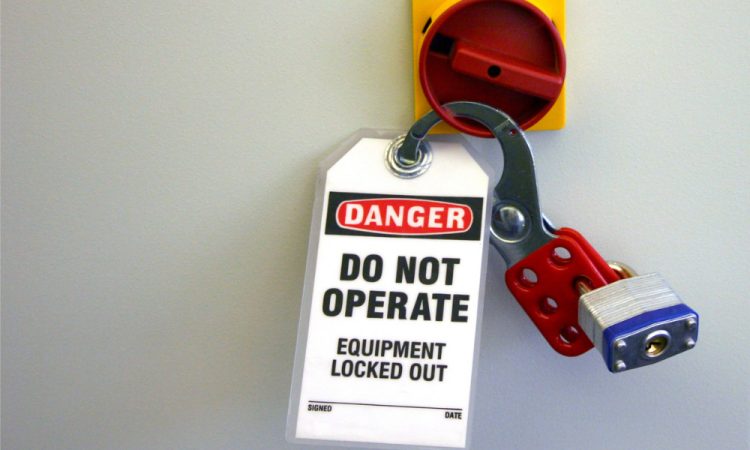
Friction also mounts when technicians must fiddle with overcomplicated, proprietary devices that require hand tools to install. Standardize your locking hardware around universal, tool-free designs wherever possible. Clamping circuit breaker lockouts that tighten with a thumb wheel, universal cable locks that cinch shut with one hand, and quarter-turn ball valve lockouts reduce the time spent fiddling with devices. The faster an isolation point can be secured, the less tempting it is to bypass it.
Clarifying the Grey Zone: Routine Servicing vs. Full Lockout
One of the quickest ways to destroy the credibility of a safety program is enforcing an absolute, dogmatic standard where it does not fit reality. In almost every manufacturing environment, operations occur that live in the contentious border between production operations and maintenance servicing: clearing simple jams, adjusting guide rails, changing minor tooling, or lubricating bearings.
Telling operators that they must complete a full, multi-point zero-energy shutdown every time an empty cardboard carton hangs up on a conveyor belt is fundamentally detached from shop-floor realities. If an entire line takes forty minutes to power down, bleed down, and restart for a thirty-second jam-clearing task, operators will find a way to circumvent the guards.
Industrial safety standards recognize this reality through specific exceptions for minor servicing during normal production operations. However, to leverage these exceptions safely, engineering teams must build engineered alternative protection measures.
These measures include:
-
Control-reliable interlocks that immediately kill hazardous motion when a guard door opens, without dropping main system power or requiring software reboots.
-
Trapped-key interlock systems that mechanically require the power key to be inserted into a gate lock before access is granted.
-
Dedicated jam-clearing tools that prevent any part of the operator’s body from entering the machine’s pinch points.
When companies clearly define what constitutes routine minor servicing and engineer safe, fast ways to perform those tasks, workers respect the line. They save full lockout protocols for true maintenance tasks because the safety team has not forced them to cry wolf on routine operational interruptions.
Transforming Periodic Audits into Field Coaching
Annual regulatory compliance mandates that organizations audit their energy control procedures and observe authorized personnel performing lockouts. In many facilities, this process degenerates into an adversarial policing exercise. A safety specialist stands with a clipboard, checks boxes, and writes up technicians for minor infractions.
This approach ensures that technicians perform perfectly while the auditor is watching, only to return to habitual shortcuts the moment the clipboard leaves the department.
High-functioning programs treat periodic reviews as practical field validations of the procedures themselves. Instead of testing whether the technician memorized a piece of paper, use the review to ask critical operational questions:
-
Does this valve actually seal completely when closed, or does line pressure still bleed through?
-
Is the disconnect handle difficult to reach, requiring a ladder that nobody wants to fetch?
-
Has new tooling or an auxiliary pump been plumbed into this machine since the last procedure update?
When technicians realize that the audit is an opportunity to improve the usability of their equipment and eliminate annoying operational bottlenecks, they become active partners in maintaining procedural accuracy.
The Path of Least Resistance
Compliance is an engineering problem, not a character flaw. Workers do not intentionally seek out catastrophic hazards; they seek out efficiency, flow, and the path of least resistance to complete their assignments within the demands of their shift.
If your lockout/tagout program requires scouring thick binders, walking across the plant for hardware, and halting entire production lines for trivial tasks, it will eventually fail. When you place visual, accurate instructions directly on the machine, locate the exact locking hardware within arm’s reach, and engineer reliable controls for routine interventions, compliance becomes effortless. An effective safety program is not one that looks perfect on paper, but one that workers choose to use when nobody is watching.