Modern biopharmaceuticals represent some of the most sophisticated therapeutic achievements in medical history. Monoclonal antibodies, messenger RNA vaccines, insulin analogs, and individualized cell and gene therapies have transformed patient care. Yet, these therapies share an inherent vulnerability: extreme thermal fragility. Unlike traditional synthetic small-molecule tablets that withstand ambient warehouse swings, large-molecule biologics rely on complex three-dimensional protein structures. Expose them to temperatures even slightly outside their validated envelope, and those proteins can denature, aggregate, or lose efficacy entirely.
A temperature excursion is not merely an annoying supply chain variance. It is a catastrophic event that can trigger product recalls, regulatory investigations, millions of dollars in scrapped inventory, and, most critically, compromised patient safety.
While enterprise logistics managers invest heavily in validated cold storage facilities, shipments inevitably must leave these climate-controlled sanctuaries. The true battle against temperature excursions takes place in transit, across intermodal freight networks, and during the chaotic handoffs that define global distribution. Preventing excursions requires moving beyond passive box-checking to build an integrated defense spanning thermal packaging physics, live telemetry, and disciplined human execution.
The Blind Spots of the Distribution Network
Excursions rarely occur when a product is resting inside an engineered, qualified walk-in refrigerator. They happen at the seams of the logistical chain. In logistics terminology, these are the transfer nodes where custody shifts from one party or transport mode to another.
The most dangerous vulnerability zone is tarmac dwell time. An air-cargo pallet of temperature-sensitive pharmaceuticals might travel smoothly in a temperature-controlled freighter, only to sit on a sun-baked airport tarmac for four hours during a customs delay or ground-handling shift change. In midsummer, ambient surface temperatures on blacktop tarmac easily exceed 120 degrees Fahrenheit. Without adequate protection, heat radiates directly through standard pallet covers and saturates the cargo within minutes.
Another frequent failure point occurs at the receiving dock. Temperature-controlled reefers arrive at a distribution facility, the driver opens the rear doors, and the pallets sit in an unconditioned staging bay while receiving clerks inspect bills of lading. This period of ambient exposure, often referred to as the open-trailer window, silently erodes the thermal buffer of passive shipping containers.
Finally, last-mile delivery introduces unpredictable microclimates. Delivery vans make dozens of stops each day, repeatedly opening cargo doors to ambient humidity and heat, or subjecting parcels to freezing winter winds. If packaging designs do not account for these rapid external fluctuations, the interior payload will experience a destructive thermal spike or an equally harmful freezing event.
Upgrading Thermal Packaging: Moving Beyond Gel Packs
Historically, cold chain packaging relied on expanded polystyrene coolers packed with water-based ice packs. For basic small-molecule drugs, this setup occasionally sufficed. For sensitive modern biologics, it is an unacceptable gamble.
Water freezes and melts at zero degrees Celsius. When packed against cold-chain pharmaceuticals requiring storage between two and eight degrees Celsius, standard ice packs often cause accidental freezing. In fact, accidental freezing ruins far more biologic shipments globally than heat exposure, as ice crystallization shears delicate molecular structures and separates emulsions.
Modern temperature control demands high-performance materials engineered for precise thermal thresholds:
-
Phase Change Materials (PCMs): Unlike water, engineered paraffin or salt-hydrate PCMs can be chemically formulated to change phase at exact target temperatures, such as four degrees Celsius. As the ambient temperature rises, the material absorbs latent heat without increasing in temperature until the entire mass melts, creating an exceptionally stable thermal barrier.
-
Vacuum Insulated Panels (VIPs): Traditional foam insulation slows heat transfer through trapped gas bubbles, but VIPs remove the gas entirely, creating a vacuum barrier that offers up to five times the thermal resistance of standard polyurethane or polystyrene of equivalent thickness. This allows logistics teams to reduce container bulk while dramatically extending qualification durations to 96 or 120 hours.
The Discipline of Pre-Conditioning Protocols
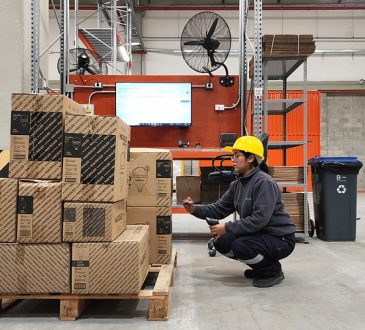
The most advanced phase change container will fail if warehouse operators do not execute proper pre-conditioning protocols. A PCM panel designed to maintain a shipment between two and eight degrees Celsius must be stored in a dedicated conditioning chamber for a validated period before assembly.
If warehouse staff pull a cooling plate directly from a sub-zero freezer and pack it adjacent to vials of insulin without allowing the plate to stabilize at its phase-change plateau, the initial contact will flash-freeze the medication. Conversely, if panels sit out on a packing line too long before box closure, their latent cooling capacity depletes before the container is even loaded onto a truck. Packaging compliance begins on the packing floor, not on the road.
Transitioning from Forensic Data to Real-Time Telemetry
For decades, the pharmaceutical industry evaluated cold chain compliance using passive USB temperature loggers. A technician unpacked the box at its destination, plugged the logger into a computer, generated a PDF graph, and discovered that the product had experienced a fatal temperature excursion three days earlier in another country.
Passive loggers provide forensic records for regulatory auditors, but they do nothing to save the product. They inform you of a failure after the damage is irreversible.
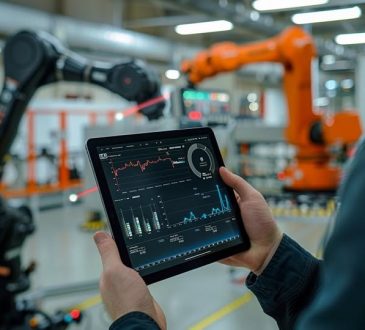
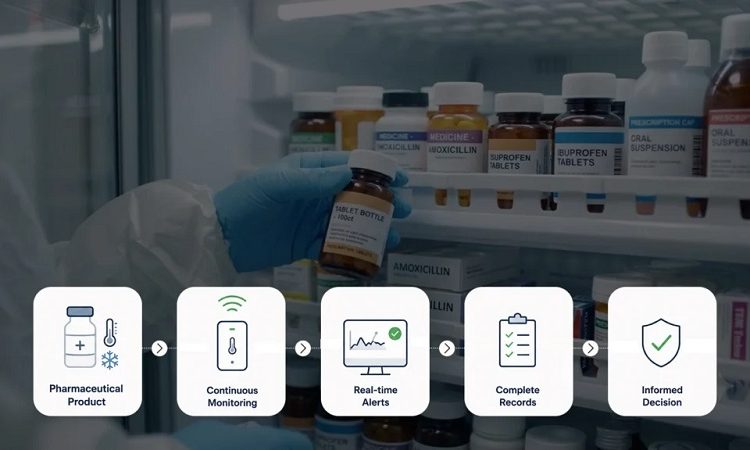
Leading biopharma organizations are replacing static loggers with active, IoT-enabled environmental sensors. These small, cellular- and satellite-connected devices ride inside the container or alongside the pallet, continuously transmitting temperature, humidity, shock, ambient light, and precise GPS coordinates to cloud-based monitoring platforms.
Real-time telemetry alters risk management in two distinct ways:
First, it enables predictive threshold alerting. Rather than triggering an alert only after the internal chamber crosses eight degrees Celsius, intelligent algorithms monitor the rate of thermal change. If a container scheduled to stay cold begins warming at an accelerated rate while stationary at an intermediate hub, the system issues a warning while the interior temperature is still within acceptable boundaries.
Second, it allows for in-transit physical intervention. When dispatchers see that a shipment is warming due to a malfunctioning reefer unit or an extended tarmac delay, they can contact local ground handlers to move the shipment into an airport cold room, add dry ice, or reroute the vehicle to an intermediate cold-storage facility before the medication spoils.
Aligning Carrier Accountability and Standard Operating Procedures
Technology and packaging are only as reliable as the humans operating the equipment. Eliminating excursions requires strict operational governance across all external transportation partners.
Pharma logistics teams must implement stringent Quality Technical Agreements (QTAs) with freight forwarders and motor carriers. These contracts should avoid vague generalizations like “keep refrigerated” and establish concrete, non-negotiable operational requirements:
-
Mandatory pre-cooling of reefer trailers for at least two hours before cargo loading to purge heat trapped in the trailer walls.
-
Continuous reefer cycle settings rather than start-stop fuel-saver modes, which allow internal trailer temperatures to drift before the compressor kicks on.
-
Clearly defined contingency protocols detailing what drivers and handlers must do in the event of mechanical breakdowns, traffic delays, or facility power outages.
Regular lane qualification audits are equally essential. Shipping lanes should be stress-tested during seasonal extremes—measuring performance along hot summer corridors and frozen northern winter routes—to identify unexpected chokepoints before commercial inventory is committed to the journey.
A Culture of Thermal Vigilance
Preventing temperature excursions in pharmaceutical distribution cannot be treated as an isolated packaging problem or an occasional procurement checklist. It is an end-to-end discipline that links clinical quality with physical execution.
When biopharma companies combine phase-change packaging, real-time IoT monitoring, and rigorous partner governance, they eliminate the guesswork that traditionally plagued perishable logistics. Protecting the cold chain is ultimately about delivering on the implicit promise made to the patient: that the lifesaving therapy leaving the manufacturing cleanroom arrives at the clinic with its biological integrity entirely intact.