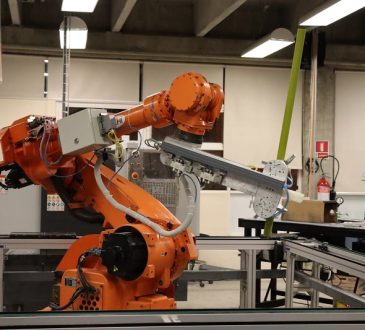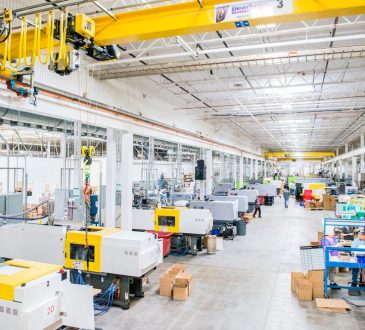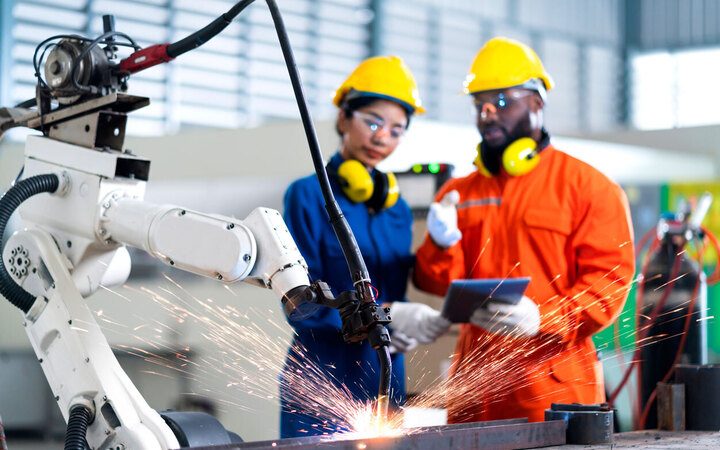
For the past decade, manufacturing discourse has been dominated by a single, sweeping narrative: automate or become obsolete. Industry conferences showcase lights-out machining cells, robotic arms assembling microelectronics at blinding speeds, and autonomous mobile robots navigating warehouse floors without a human in sight. The implication for plant managers and executive leadership is clear: human labor is a liability, and full mechanization is the only viable path to long-term profitability.
Yet, step inside the most profitable fabrication plants, aerospace facilities, and medical device assembly lines, and you will see a far more nuanced reality. Skilled machinists still listen to the subtle acoustic pitch of an end mill cutting titanium. Assemblers still inspect delicate wiring harnesses by touch, catching variations that defeat expensive machine vision systems.
The choice between automation and manual production is not an ideological crusade between the future and the past. It is an engineering and capital allocation decision. Treating automation as a blanket cure for operational inefficiencies often leads to bloated capital expenditure, rigid production lines, and crippling maintenance overhead. To build a resilient operation, manufacturers must evaluate where mechanical repeatability delivers undeniable margin improvements, and where human dexterity remains an irreplaceable competitive advantage.
The Financial Equation: Upfront Capital vs. Fluid Operational Expense
The financial contrast between manual assembly and automated cells goes far deeper than simply swapping an hourly wage for a capital lease. It reshapes how a company manages risk during market downturns and demand swings.
Manual production carries high variable costs. You pay for direct labor, overtime, benefits, training, and turnover. However, manual labor offers exceptional balance-sheet flexibility. If order volumes drop by 30 percent during an economic correction, plant managers can scale back shift lengths, reassign cross-trained personnel to other departments, or rely on natural attrition to right-size labor expenses. The operational expenditure tracks production volume relatively closely.
Automation flips this equation into a heavy fixed-cost structure. The initial purchase price of an industrial robot or custom automated assembly station typically accounts for only a fraction of the total deployment expense. Once you factor in custom tooling, systems integration, safety fencing, PLC programming, and validation trials, the true acquisition cost easily triples.
Once commissioned, that automated line incurs fixed depreciation, preventative maintenance contracts, and specialized programming talent whether it produces ten thousand units a day or sits dark for two weeks. When market demand is strong and product lifecycles are long, the low marginal cost per unit generated by an automated line produces outstanding margins. But when demand is cyclical or volatile, an underutilized robotic cell becomes an expensive anchor dragging down operational cash flow.
Where Automation Delivers Decisive Advantage
Automation is not universally superior, but within specific operational envelopes, manual production simply cannot compete.
High-Volume, Low-Mix Consistency
Automated systems thrive on consistency. When a component design remains stable for several years and volumes reach hundreds of thousands or millions of units, hard automation or dedicated robotic cells provide unmatched unit economics. Machines do not experience afternoon fatigue, suffer repetitive strain injuries, or let focus slip during shift transitions. Every weld, rivet, and screw is torqued to identical engineering tolerances, resulting in lower scrap rates and predictable output rates.
Severe Ergonomic and Safety Environments
Deploying human operators to handle caustic chemical dips, extreme thermal stamping, repetitive heavy lifting, or high-decibel stamping presses introduces immense regulatory and human risk. Automating hazardous tasks protects human workers from life-altering injuries while insulating the business from workers’ compensation liabilities and costly downtime.
Tight Engineering Tolerances and Traceability
In sectors like semiconductor packaging, precision optics, and pharmaceutical dispensing, human hands introduce contamination and lack the micro-scale motor precision required by modern engineering specifications. Automated assembly cells equipped with inline metrology can measure physical dimensions to the micron level and immediately log serial numbers, torque values, and lot codes into enterprise execution software, generating an unbroken audit trail for regulated industries.
The Enduring Strengths of Manual Production
Despite advances in mechatronics and artificial intelligence, human operators possess sensory capabilities and physical adaptability that engineers struggle to replicate cost-effectively in steel and silicon.
High-Mix, Low-Volume Agility
In job shops, custom machinery manufacturing, and contract manufacturing, the production schedule changes almost daily. Running small batches of fifty or two hundred custom parts requires constant changeovers.
Reconfiguring a manual production line for a new SKU might require thirty minutes of moving physical fixtures, swapping hand tools, and reviewing a print. Reconfiguring a robotic cell often demands hours of mechanical re-fixturing, vision system retraining, safety zone recalibration, and program debugging. If your facility runs on high product variety, the downtime required to retool automated machinery can wipe out any theoretical gains in cycle time.
Tactile Feedback and Complex Materials
Automated end-effectors struggle with non-rigid, flexible, or highly variable raw materials. Assembling leather upholstery, routing flexible rubber hoses through tight chassis cavities, or working with cast metal parts that exhibit slight dimensional variances from pour to pour requires dynamic tactile adjustment.
A human operator instantly feels when a threaded fastener is about to cross-thread or senses when a gasket is slightly out of alignment. Replicating that tactile intuition with force-torque sensors and adaptive programming requires massive capital investments that rarely generate an acceptable return on investment.
Rapid Prototyping and Short Product Lifecycles
If a product’s engineering design evolves every six months based on customer feedback, investing in hard automation is financially counterproductive. The tooling will become obsolete before the initial investment depreciates. Manual assembly allows engineering teams to modify product geometry, adjust fastener locations, and refine assembly sequences on the fly with zero software recompilation or hardware scrap.
The Pragmatic Middle Ground: Collaborative Augmentation
Forward-thinking manufacturers are moving away from an all-or-nothing mindset in favor of collaborative production architectures. Instead of trying to fully automate an entire line, they identify specific operational bottlenecks and inject targeted mechanization alongside their human workforce.
This hybrid model manifests in several high-impact ways:
-
Collaborative robots (cobots) for mundane staging: Deploying power- and force-limited cobots to handle palletizing, machine tending, or basic dispensing tasks frees skilled technicians from repetitive drudgery without requiring massive safety cages or disruptive facility overhauls.
-
Smart fixturing and error-proofing (Poka-Yoke): Equipping manual workbenches with torque-sensing electric drivers, pick-to-light bins, and digital work instructions gives manual assembly the quality assurance of an automated line while retaining human dexterity.
-
Modular automation cells: Building self-contained, wheeled automated stations that can be rolled into a manual line during peak volume surges and wheeled out during custom short-run days gives manufacturers true volume elasticity.
Evaluating Your Shop Floor
Determining whether to automate a manufacturing process comes down to three fundamental parameters: volume stability, process variability, and product lifecycle longevity.
If your designs are finalized, volumes are guaranteed, and the physical motions are entirely uniform, automation is a mathematical imperative. But if your competitive advantage relies on customization, rapid client turnaround, and assembling intricate or irregular materials, investing in ergonomic manual stations and worker skill development will deliver far better capital efficiency.
Manufacturing excellence is not measured by the number of robotic arms on your floor. It is measured by the reliability, quality, and unit margins of the products leaving your shipping dock. Automation is simply one set of tools among many to achieve that objective.