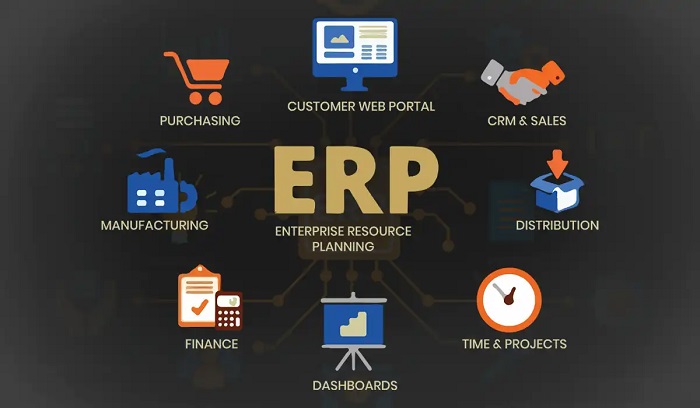
Enterprise IT architecture has evolved far beyond the walled-garden systems of the past two decades. Modern business operations depend on an intricate, sprawling web of SaaS applications, custom mobile interfaces, customer-facing e-commerce storefronts, robotic process automation bots, and internet-of-things sensors. At the epicenter of this matrix sits the enterprise resource planning (ERP) system, acting as the ultimate single source of operational truth.
Yet, as organizations dismantle monolithic barriers in pursuit of agile workflows, they routinely trip over an archaic contractual landmine: indirect access licensing.
What an engineering team views as standard systems integration, an enterprise software vendor may interpret as widespread, unmetered, and unlicensed software utilization. When an external application queries, triggers, or writes data to an ERP database through an API, middleware bus, or third-party platform, it exposes the business to indirect access claims. Without proactive technical governance and commercial foresight, an routine vendor audit can instantly morph into an eight-figure balance-sheet shock.
The Mechanics of Indirect Access Exposure
Legacy ERP contracts were drafted in an era when enterprise computing was simple and observable. Software usage was defined by human operators sitting at designated terminals, typing into proprietary graphical user interfaces during standard business hours. Licensing models reflected this reality through named user licenses, tiered by operational authority from heavy professional users down to occasional self-service employees.
Digital transformation fundamentally disrupted this commercial framework. Today, transactions rarely originate within the ERP client itself. A field technician logs customer service data into a third-party CRM on a tablet, a customer places an order on a bespoke web portal, or an automated workflow reconciles logistics telemetry through a message broker.
When these external systems push or pull data from the central ERP instance, indirect access occurs. Software vendors argue that the downstream user or system is extracting economic value from the core intellectual property of the ERP engine. Consequently, auditors often attempt to classify every individual customer, partner, or automated script initiating an indirect transaction as a distinct named user. When applied across thousands of e-commerce buyers or supply chain partners, the resulting retroactive licensing fees and maintenance back-charges can outstrip the initial capital cost of the ERP implementation itself.
The Vendor Playbook and Audit Leverage
Understanding how indirect access exposure is surfaced requires analyzing the commercial incentives of enterprise software vendors. Over the past decade, major legacy software providers have faced intense pressure to migrate on-premises enterprise clients into cloud-hosted subscription environments.
Indirect access claims are rarely pursued in isolation; they are frequently leveraged as strategic negotiating instruments during high-stakes contract renewals.
Audits typically begin with automated telemetry scripts that flag high-volume Remote Function Calls, database triggers, intermediate document transfers, and application programming interface exchanges passing through enterprise integration platforms. When anomalous or dense API traffic is detected from external IP addresses or service accounts, auditors request comprehensive architecture schematics to trace the origin of those requests.
If the contract contains ambiguous terminology regarding what constitutes “direct” versus “indirect” use, the vendor enters the negotiation holding substantial financial leverage. CIOs and procurement executives are often presented with a stark choice: pay punitive compliance penalties for historical indirect access under their current on-premises contract, or waive the fees by committing to an expensive, multi-year migration to the vendor’s proprietary cloud suite.
The Shift to Metric-Based and Document Licensing
In response to widespread enterprise pushback and legal disputes over the definition of a “user,” leading enterprise software vendors introduced alternative licensing schemes designed for the digital era. Rather than attempting to count the unpredictable number of humans or machines touching an external system, these models meter the direct outputs produced within the ERP core.
Under document-based licensing, the metric shifts from who initiated the transaction to what business record was created. Common billable documents include:
-
Sales orders generated from third-party portals or digital storefronts
-
Purchase orders submitted through external supplier networks
-
Invoices processed via standalone billing engines
-
Manufacturing work orders triggered by shop-floor software
-
Financial entries written by external treasury management systems
While document-based licensing removes the ambiguity of counting named users in automated pipelines, it is not an automatic panacea. It transforms IT infrastructure into an operational toll road. If an enterprise experiences rapid transaction volume growth without a corresponding expansion in gross margins, its software licensing overhead scales linearly with operational activity. Furthermore, transitioning from a named-user agreement to a document-based framework requires surrendering existing contractual rights, making the math surrounding long-term transaction volume essential before signing any amendment.
Architecting for Compliance and Financial Containment
Eliminating indirect access exposure requires a dual strategy that balances software asset management with deliberate infrastructure design. Enterprise architects cannot design integrations in a vacuum, ignoring the commercial constraints of the underlying contracts.
Decoupling and Data Aggregation
Direct, synchronous read-write connections between external platforms and the ERP core carry the highest audit risk profile. Organizations should decouple peripheral systems by implementing intermediary data staging layers, operational data stores, and modern analytical lakehouses.
Instead of allowing third-party tools to perform real-time transactional reads against production database tables, businesses can replicate read-only operational data into decoupled environments. Browsing product catalogs, reviewing historical invoices, and checking stock availability can all occur against cached or aggregated data sets. In many vendor frameworks, querying static or secondary read-only data that has been asynchronously exported does not trigger an indirect access licensing event, provided the export process was not engineered explicitly to circumvent transactional logic.
Instrumentation at the API Gateway
Enterprise organizations must maintain rigorous visibility over their own integration perimeter before an auditor arrives. Deploying a centralized API gateway allows technical teams to track, monitor, and catalog every inbound payload interacting with the ERP system.
By establishing dedicated service accounts for specific applications—such as e-commerce, CRM, or supply chain execution—IT leaders can quantify exact document creation rates in real time. This instrumentation provides empirical baseline data, enabling procurement teams to model the exact financial ramifications of potential licensing changes and detect integration leaks before they escalate into contractual non-compliance.
Contractual Modernization and Scope Definitions
Technical controls must be reinforced by defensive contractual language. During major renewals or platform transitions, procurement leaders must insist on precise, exhaustive definitions of system use.
Negotiation teams should secure explicit contractual exclusions for specific integration categories. Critical carve-outs include read-only telemetry querying, robotic process automation bots performing internal employee-assist workflows, automated disaster recovery synchronization, and basic database monitoring. Establishing a pre-agreed financial cap on indirect access liabilities prevents auditors from retroactively recalculating licensing exposure based on theoretical, worst-case user counts.
Aligning Architecture with Commercial Governance
Indirect access licensing exposure is fundamentally a byproduct of the tension between modern, open API-first software architectures and traditional software monetization strategies. Enterprise technology leaders cannot afford to treat licensing governance as an administrative afterthought relegated to procurement teams months after an architecture has gone live.
By maintaining strict visibility over API integration boundaries, deploying data tiers that minimize unnecessary transactional writes to the ERP core, and aggressively establishing clear contractual boundaries, organizations can modernize their enterprise application ecosystems without surrendering control of their capital expenditure.
Meta Title:
Meta Description: