For years, the single image sponsored content ad has served as the workhorse of B2B demand generation on LinkedIn. Marketers designed a bold creative asset, paired it with punchy copy and a call to action, aimed it at an audience of target accounts, and routed traffic to a gated landing page. When done well, it provided predictable top-of-funnel reach.
Over time, however, the corporate LinkedIn feed has grown increasingly congested. As more brands compete for the same executive eyeballs, visual fatigue and banner blindness have compressed average click-through rates. More critically, the single image ad relies on a blunt, one-way broadcast mechanic: it presents a single proposition to a prospect who may be at any stage of the buying cycle, betting everything on a single destination URL.
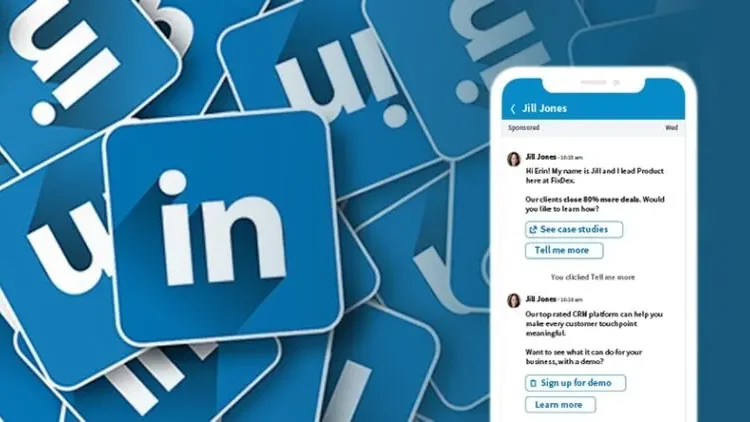
Transitioning to LinkedIn Conversation Ads represents a fundamental shift from broadcasting at an audience to initiating an interactive, self-directed consultation. Delivered directly into a prospect’s LinkedIn messaging inbox only when they are actively online, conversation ads offer an uncluttered environment and a branching, choose-your-own-adventure framework. Making this transition successfully requires rethinking your creative strategy, audience qualification, technical budgeting, and messaging psychology.
The Mindset Shift: From Billboard Exposure to Guided Consultation
A single image ad functions like a highway billboard. An executive scrolls past at high speed, and you have perhaps two seconds to catch their eye, communicate a value proposition, and convince them to abandon their feed. Because the medium is passive, the ad must speak broadly to an entire persona.
Conversation ads function like a personal meeting in an executive suite. The format grants you the prospect’s undivided attention within their private inbox. Instead of serving an identical pitch to every director or vice president in your audience, you present a tailored message accompanied by multiple response pathways.
The primary objective is not to force an immediate conversion, but to let the prospect qualify their own intent. An operations leader who is actively hunting for a software solution can click through directly to book a product demonstration, while a peer who is merely gathering market intelligence can choose to download an un-gated industry benchmark report. By offering multiple logical paths, you capture value from prospects who would have bounced immediately from a rigid landing page.
Selecting and Calibrating the Sender Persona
Single image ads are published by the corporate brand page. The interaction is company-to-consumer, which naturally keeps the prospect’s guard up.
Conversation ads, by contrast, are sent from a real person’s LinkedIn profile. The identity of this sender dictates your open rates, read rates, and overall trust before the recipient even reads your first sentence.
-
Avoid the generic sales representative. Assigning an entry-level business development representative as the sender rarely works when targeting senior decision-makers. Executives prefer to hear from professional peers who understand their operational reality.
-
Leverage domain experts and subject matter authorities. Senders with titles like Head of Product, Chief Technology Officer, or Principal Solutions Architect consistently outperform traditional sales and marketing titles. An engineering leader is far more likely to engage with an ad about platform architecture if it originates from a fellow technical executive.
-
Audit and optimize the sender’s public profile. When prospects receive a message ad, their first action is almost always clicking the sender’s name to evaluate their credibility. Ensure the sender has a professional headshot, an articulate headline, and a well-curated profile that reflects authentic industry involvement.
Architecting the Branching Logic
The architecture of a conversation ad determines whether the recipient engages or immediately archives the thread. Many marketing teams stumble during the transition by treating the format like a long, formal cold email. In reality, the most effective conversation ads read like concise, respectful business correspondence written on a mobile device.
The Opening Hook
Keep your initial message under 500 characters. State your premise quickly, contextualize why you are reaching out to their specific role, and avoid aggressive corporate jargon. Frame the outreach around solving a known friction point rather than listing your product’s feature specifications.
Structuring Decision Buttons
Limit your initial branch to two or three clearly differentiated options. Giving recipients five or six choices introduces decision paralysis, which leads directly to conversation drop-off.
Your initial buttons should balance high-intent and low-intent actions:
-
The direct engagement path: Designed for problem-aware prospects ready to evaluate solutions (e.g., “See how the platform works” or “Request a pricing preview”).
-
The educational path: Designed for research-phase prospects who want insights without commercial pressure (e.g., “Review the executive framework” or “Explore the case study”).
-
The graceful exit or passive alternative: An option that lets the user opt out or ask a lighter question without hostility (e.g., “Not right now, just exploring”).
When a user clicks an educational path, do not immediately force them onto an external webpage. Use the subsequent message branch to deliver immediate value directly inside the conversation, such as summarizing the core takeaway of a study, before offering a secondary button to download the full asset via a pre-filled LinkedIn Lead Gen Form.
Financial Dynamics: Navigating the Cost-Per-Send Model
Transitioning from single image ads to conversation ads requires a structural adjustment in how your performance marketing team manages budget allocation.
Single image ads operate primarily on a Cost Per Click (CPC) or Cost Per Mille impressions (CPM) model. If a user scrolls past your image without clicking, you incur minimal cost on a CPC basis. Conversation ads operate exclusively on a Cost Per Send (CPS) basis. You pay each time a message is successfully delivered to an active member’s inbox, regardless of whether they open the message, click a response button, or take an action.
Because you pay for every single delivery, running broad, loosely filtered audience segments will rapidly burn your marketing budget. Conversation ads demand precision account-based marketing (ABM) and strict persona filtering:
-
Target tightly defined account lists rather than broad industry categories.
-
Exclude junior roles, peripheral departments, and current customers with extreme care.
-
Account for LinkedIn’s strict messaging frequency caps. LinkedIn limits the number of sponsored messages a member can receive across all advertisers within a set period. Because inventory is limited, delivery rates can fluctuate, making consistent daily budget pacing essential.
Analyzing Multi-Branch Conversion Metrics
Evaluating the success of a conversation ad campaign requires looking well beyond traditional click-through metrics. Because the interaction consists of multiple stages, performance analysis must treat the campaign as a dynamic conversion funnel.
Track your open rate to evaluate the strength of your sender persona and the preview snippet. A low open rate indicates that recipients do not recognize or trust the sender, or that the subject line feels promotional.
Monitor your click-to-open rate (CTOR) to measure how effectively your opening copy drives action. From there, evaluate your branch selection distribution. If 80 percent of your audience selects your low-intent educational asset while only 5 percent selects the product demonstration, that data provides immediate, unvarnished insight into your market’s readiness to buy. You can refine your follow-up workflows and sales outreach accordingly.
Building a Unified Funnel
Transitioning to conversation ads does not mean permanently abandoning your single image creatives. The most resilient B2B acquisition programs use both formats in tandem.
Use single image ads in the public feed to build broad brand familiarity, establish category presence, and prime target accounts with recognizable design cues. Once that baseline visual awareness is established, deploy conversation ads to deliver high-touch, tailored messages directly to senior stakeholders. By pairing broad visual air cover with private, interactive dialogue, you transform casual feed scrollers into engaged participants in a meaningful business conversation.